Learning Design
Receiving Feedback Workshop
Overview
I created and delivered a professional development workshop grounded in sport psychology, organizational behavior research, and the feedforward methodology. My focus was on building a structured, evidence-based learning experience that helped participants shift their relationship with feedback from something feared and avoided to something actively sought and used as a tool for growth.
My Role
I led all aspects of the workshop from initial concept through curriculum design, facilitation, and post-session evaluation. My responsibilities included:
Designing the curriculum and learning experience, including:
Developing the three-stage Awareness Clarify Act framework for receiving feedback, grounded in Stone and Heen's feedback triggers research, Gallwey's interference model, and Dweck's growth mindset theory
Designing the feedforward exercise, a structured peer dialogue activity drawing on Marshall Goldsmith's feedforward methodology, adapted to build future-oriented feedback skills in a group setting
Creating participant materials including reflection worksheets, trigger identification tools, and post-session practice prompts
Sequencing the learning arc to move participants from intellectual understanding to embodied practice within a single ninety-minute session
Creating psychological safety through structured warm-up activities and explicit community agreements before introducing emotionally activating content around feedback triggers
Facilitating large group discussion, small group breakouts, and individual reflection across multiple modalities within a single session
Adapting facilitation in real time based on participant energy and engagement throughout the session
Developing a facilitator guide and slide deck for consistent future delivery across different organizational contexts
Approach Used
The workshop is informed by:
Sport psychology — Drawing on the mental performance practices of elite athletes to reframe feedback as performance data rather than personal judgment, making the skill of feedback reception concrete and trainable rather than personality-dependent
Feedforward methodology — Replacing retrospective critique with future-oriented input, shifting participant orientation from defensiveness about the past to curiosity about what comes next
Addressing Team Dysfunction -
Video & Job Aid
Overview
In today’s fast-paced work environments, team dysfunction is a frequent barrier to productivity and morale. To address this issue, I designed a concise, four-minute educational video and a supporting job aid based on Patrick Lencioni’s Five Dysfunctions of a Team framework. This resource was developed to help employees quickly recognize common team challenges and apply actionable strategies to foster healthier team dynamics.
Instructional Goal
The goal of this project was to introduce learners to the five core dysfunctions outlined by Lencioni (absence of trust, fear of conflict, lack of commitment, avoidance of accountability, and inattention to results) and provide clear, accessible strategies to identify and address each within their own teams.
Target Audience
The content was created for employees across departments who participate in team-based work but may not have formal training in team development or leadership.
My Role
As the instructional designer and content creator, I was responsible for:
Translating theoretical concepts into practical, relatable examples.
Writing the video script and designing the visual storyboard.
Developing the video using Canva.
Creating a printable and digital job aid summarizing key points and reflective prompts.
Instructional Strategies
The learning experience was built around microlearning principles to accommodate busy professionals. The video used animated storytelling and real-world examples to illustrate each dysfunction in an engaging, memorable way. The accompanying job aid provided:
Do's and Don'ts for each Dysfunction stage.
Designing for Inclusion – A Course on Accessible
Web Design
Overview
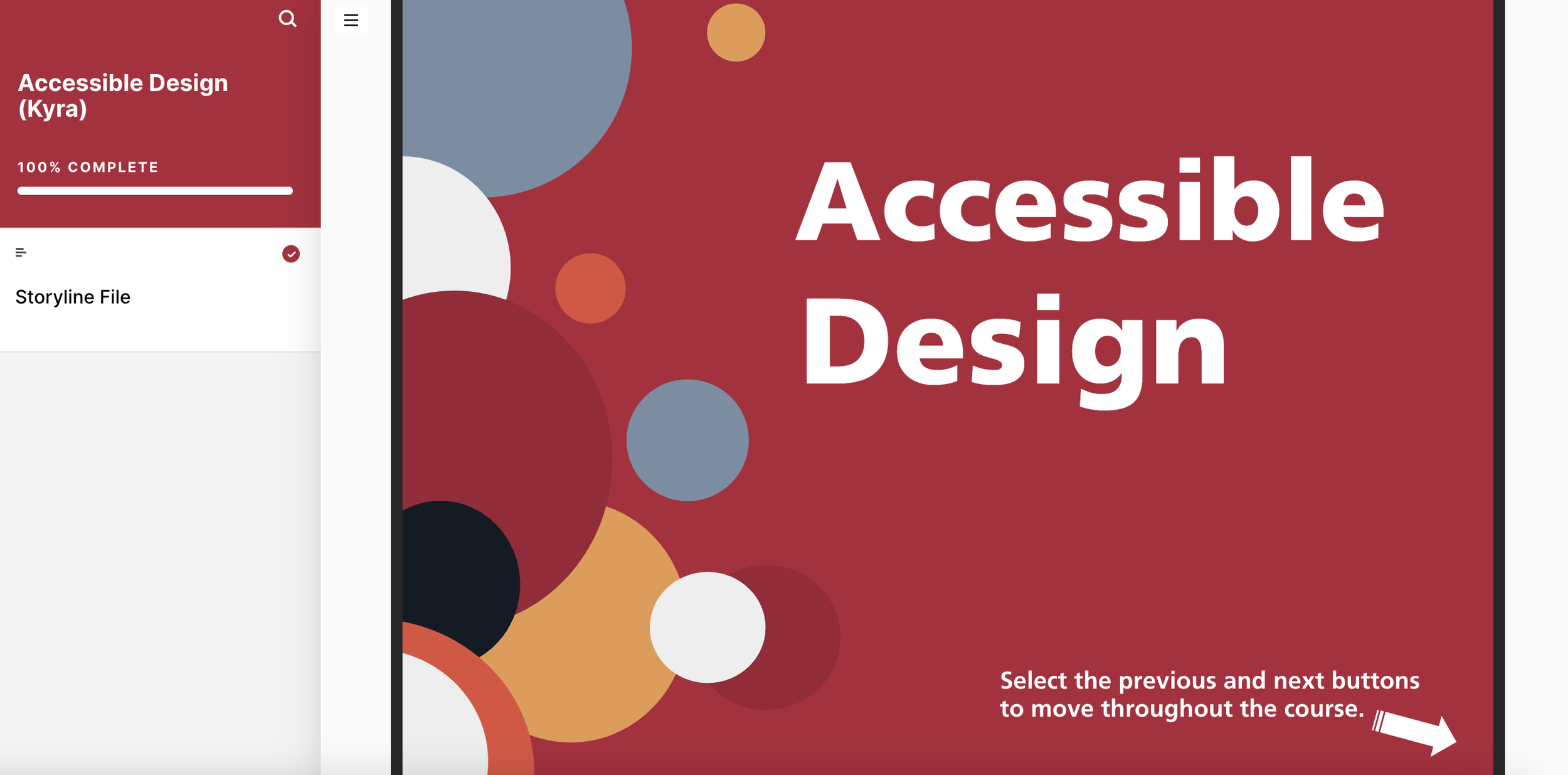
During my time as a Learning Developer Intern at Southwest Airlines, I had the opportunity to contribute to the company's mission of accessibility and inclusion by developing an eLearning course on accessible web design. The project was inspired by conversations with the Advocacy team, which handles disability-related feedback and compliance concerns. These discussions revealed a clear need for more awareness and training on inclusive digital practices.
Instructional Goal
The course was designed to educate web designers on how to create more inclusive digital experiences. The objective was to highlight common design pitfalls and offer practical, easy-to-implement solutions that would enhance usability for all users.
Target Audience
The course was tailored for web designers and developers working within corporate or internal platforms who may not have been previously exposed to accessibility standards or the lived experiences of users with disabilities.
My Role
As the instructional designer and developer, I led the end-to-end design and creation of the course. My responsibilities included:
Conducting research on common accessibility issues based on WCAG guidelines and internal feedback.
Writing learning objectives and structuring content around real-world mistakes and best practices.
Designing and developing the course in Articulate Storyline.
Creating all visual assets and interactive elements.
Instructional Strategies and Tools Used
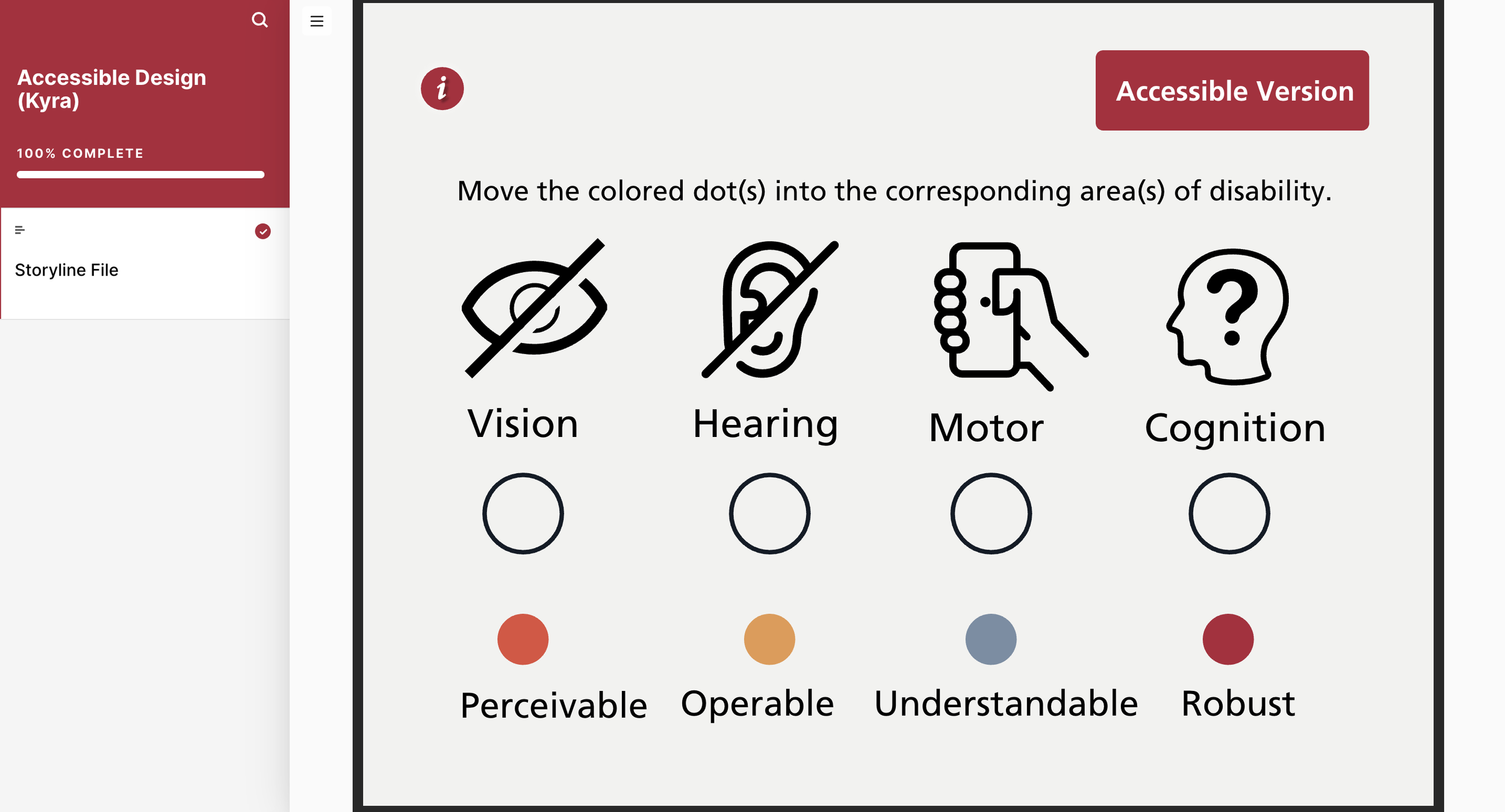
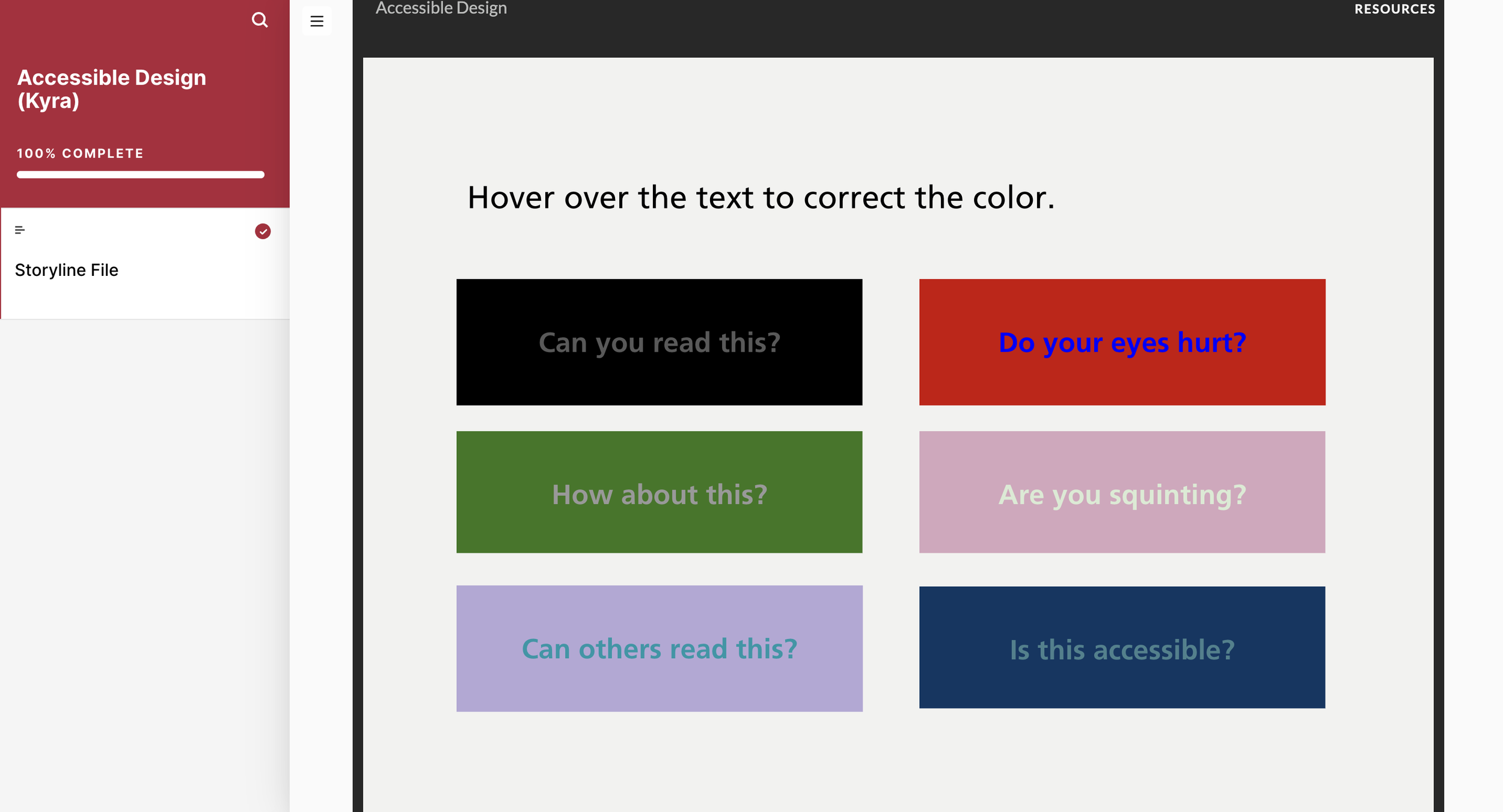
The course used scenario-based learning, interactive activities, and visual demonstrations to keep learners engaged. Key instructional elements included:
Personalization features to adapt content based on user responses.
Learning checkpoints to reinforce knowledge retention.
Drag-and-drop interactions to increase engagement with design concepts.
Corrective feedback to help learners understand not just what went wrong, but why it matters.
Graduate Education Prompt Engineering Module
Overview
I designed a week-long, asynchronous online course to introduce graduate students in Newcastle University’s Education: International Perspectives program to prompt engineering as part of broader AI literacy. The course helped future educators explore how structured AI interactions can be leveraged for learning, writing, and professional communication.
Instructional Goal
Equip learners with an understanding of prompt engineering principles, practical techniques for crafting effective prompts, and the ability to apply these skills in real-world academic and professional contexts.
Target Audience
Graduate students in education and international perspectives, many of whom were unfamiliar with artificial intelligence tools or prompt engineering. The course was also designed to accommodate a range of digital literacy levels, from novice to advanced users.
My Role
Course Designer and Instructional Developer
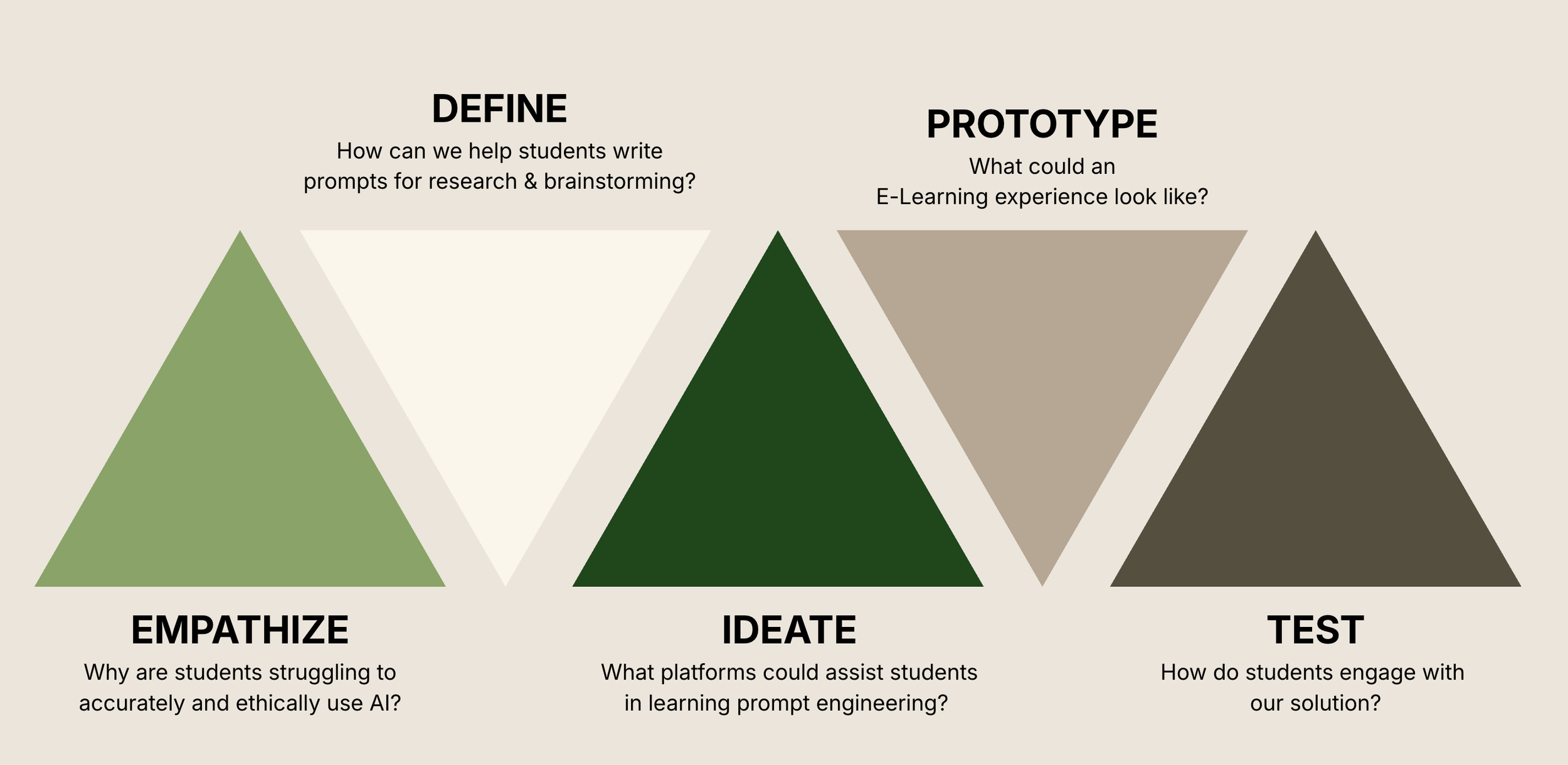
Applied a design thinking framework to structure the learning journey
Curated all learning materials (video, readings, activities)
Developed interactive discussion prompts to foster reflection and peer learning
Instructional Strategies
Design Thinking Framework to structure learning and reflection
Scaffolded learning from foundational knowledge to hands-on practice
Active learning through AI-powered games (Quick Draw!, Gandalf, Say What You See)
Hands-on practice using Gamma AI to build presentations and test prompts
Social learning via structured reflection and peer discussions
Multimodal content to engage various learning styles (videos, articles, games, interactive tools)
Outcomes & Reflection
This project helped me gain deeper expertise in:
AI literacy curriculum design
Integrating prompt engineering into education and learning technologies
Applying design thinking to emerging topics in higher education
Designing for both practical skill-building and conceptual understanding